
India has capped gold imports under the Advance Authorisation scheme at 100 kg, a day after significantly increasing import duties on precious metals. This move aims to tighten conditions for duty-free gold imports by jewellery exporters and curb non-essential imports amidst a ballooning import bill.

In her first interview to CNN-IBN's Suhasini Haider after taking over as the US Ambassador to India in April 2012, Nancy J Powell, compared India's 'lower'oil cuts unfavourably to Japan that has already received an American sanction waiver after it cut oil imports by a whopping 80 per cent in April. India has announced a 34 per cent cut so far.

The BCCI is committed to improving player preparation for major series in South Africa, England, New Zealand, and Australia (SENA countries) by ensuring adequate rest, acclimatisation, and practice matches, according to secretary Devajit Saikia.

Indian refiners have access to only limited Iranian volumes compared with Russian oil, and even the barrels on offer come with 'too many hassles'.

If the conflict continues for a prolonged period, State-run oil companies may have to review retail fuel prices accordingly.

Amidst the ongoing conflict in West Asia, the Oil Ministry assures citizens that India's LPG supply remains secure, with no need for panic booking of cylinders. The normal delivery cycle of two-and-a-half days is being maintained, and crude oil is being sourced from diverse routes.

'All these reports and announcements by the US seem like attempts to gain a lever in trade deal negotiations with India.'

A bipartisan group of US Senators has agreed to fast-track a bill allowing the President to impose sanctions on major purchasers of oil from Russia and Iran. This legislation, known as the Lindsey O. Graham Sanctioning Russia and Iran Act of 2026, aims to restrict funding for Russia's war efforts and Iran's energy and weapons sectors, potentially impacting countries like China and India through tariffs and other restrictions.

'Energy prices would shoot up with the closure of Hormuz again.'
.jpg)

The FCNR (B) stratagem relies on using public money to defend the rupee. The State subsidises foreign borrowing to attract dollars. This tool requires large-scale borrowing to make a material difference against a gross external flow of $11 billion a day. A commensurately large fiscal cost falls upon the exchequer. The ministry of finance will choose how much it is willing to spend in exchange for this round number, points out Ajay Shah.

Prime Minister Narendra Modi cautioned against the 'weaponisation' of technology and critical minerals at the BRICS summit, advocating for cooperation to foster shared prosperity. Concurrently, Chinese President Xi Jinping announced plans for an open-source AI ecosystem for BRICS nations, positioning Beijing as a key technology partner amid global AI competition.

Not a single retail outlet ran dry. Every household that wanted a cylinder got one. India faced neither a 1991 moment nor a 2013 one. Macroeconomic stability held. This was not an accident, and it was not luck alone. It was the work of a government that chose to act as it had during the pandemic -- deliberately and gradually, building one measure upon another rather than reaching for a single dramatic lever, explains V Anantha Nageswaran, chief economic advisor to the Government of India.

Indian benchmark indices, Sensex and Nifty, extended their rally for the fourth consecutive day, driven by a significant drop in crude oil prices and strong performance from IT firms, despite mixed global cues.

India is well-stocked with inventories of crude oil and key petroleum products, including petrol, diesel, and aviation turbine fuel (ATF), to deal with short-term disruptions as the war intensifies in West Asia, Union Minister of Petroleum and Natural Gas Hardeep Singh Puri said on Tuesday.

India has removed a key regulatory hurdle, allowing exporters to receive payments in Indian currency while retaining incentives under the country's foreign trade policy, a move aimed at promoting wider use of the rupee in international trade.
India's crude oil import bill almost doubled between April and August this financial year compared with the same period a year ago as average oil prices rose 75 per cent over the year-ago period.

India's procurement of Venezuelan crude oil has picked up momentum since April and the South American nation has already emerged as the third largest oil supplier to the country.

Analysts predict that developments in West Asia, their impact on crude oil prices, and the trading activity of foreign institutional investors (FIIs) will be crucial factors influencing the Indian stock market this week.

Indian benchmark equity indices Sensex and Nifty surged in early trade, driven by a sharp correction in crude oil prices below USD 100 per barrel and a rally in global markets, fuelled by improving sentiment surrounding US-Iran negotiations.

A Kishore Kumar song, a birthday cake, a prince's break from protocol to thank his driver, a Persian painting on the ceiling of the presidential residence -- the BRICS Summit had many memorable moments.

India is set to reduce its direct imports of Russian crude from late November, following new US sanctions on Rosneft and Lukoil, effective November 21.

Foreign Portfolio Investors (FPIs) withdrew nearly Rs 33,000 crore from Indian equities in May, bringing the total outflow for 2026 to Rs 2.25 lakh crore, driven by weak earnings growth, rupee depreciation, and more attractive opportunities in other global markets.
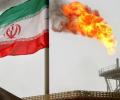
Replacing Iran, which is India's third largest oil supplier behind Iraq and Saudi Arabia, will not be a problem but margins will be hit as Tehran offers the best commercial terms

The harsh truth is that the US is no longer a reliable partner, cautions Ramesh Menon.

That means making it easier to invest, protecting investors through predictable rules, and avoiding policy reversals after investments have been made, notes Rajeswari Sengupta.

Analysts predict India will face oil price volatility and macroeconomic effects due to the escalating Iran crisis, though the country's oil supply chain is not yet structurally insecure.

'India was the emirate's largest international source market by hotel guest volume.'

Moody's Ratings has reduced India's GDP growth forecast for 2026 to 6 per cent, citing subdued private consumption, capital formation, and industrial activity due to higher energy costs and global uncertainties.

The Indian government has defended its E20 ethanol blending programme, stating that extensive testing and field experience show no evidence of abnormal engine wear, corrosion, or reduced vehicle life, despite a potential 2-6% reduction in fuel economy.

United States President Donald Trump on Wednesday claimed that India will significantly reduce Russian oil imports by year-end, citing Prime Minister Narendra Modi's assurance.
The basket of crude oil India imports averaged $99 a barrel on Tuesday, the lowest level since April 2, a petroleum ministry official said. It had averaged $96.52 a barrel on April 1 and crossed the $100 mark on April 7.

It is plain to see that the US senate bill's real objective is to derail India's time-tested strategic partnership with Russia, points out Ambassador M K Bhadrakumar.

Foreign portfolio investors (FPIs) have injected Rs 30,919 crore into Indian equities in August, marking their second consecutive month of net buying. This follows a Rs 20,200 crore investment in July, indicating a potential reversal after four months of significant outflows, driven by improving corporate earnings, resilient economic activity, and a stable rupee.

Indian equity benchmark indices Sensex and Nifty experienced a significant tumble in early trade, with the Sensex tanking nearly 700 points, driven by uncertainty surrounding US-Iran negotiations, a fresh spike in crude oil prices, and persistent foreign fund outflows.
Crude oil import surged 15.4 per cent to 51.88 million tonnes as against 44.97 million tonnes in April-August and oil product exports jumped 35.7 per cent to 16.61 million tonnes.

'Trump is likely being purposefully vague, hoping that this lack of clarity will pressure India, fearing the worst, to agree to scale back its imports of Russian oil.'

'Every year we import approximately $70 billion worth of gold -- closer to $72 billion in 2025-2026, an all-time record.' 'There is no parallel for this anywhere in the world. And this love for gold will not disappear overnight.'

Two commercial vessels, an oil tanker and a cargo ship, carrying a total of 22 Indian nationals, were hijacked by armed pirates in separate incidents off Yemen and Somalia. All Indian crew members on both vessels are reported to be safe, according to the latest information from the shipping ministry and the External Affairs Ministry.
